


AI writes fast. That is precisely why it is dangerous when misused: it fills the space faster than you decide what to put in it. The real question is not “should you use AI to produce content,” the market has already settled that. The question is “how to use it without diluting your voice, without publishing falsehoods, and without ending up with content everyone recognises as generated.” This guide gives the frame: what AI does well, what it does not decide, and the workflow that combines machine speed with human curation.
What AI does well, and fast
Content is where AI adoption has exploded. According to a SEO.com compilation, nearly 70% of marketers have already integrated AI into their strategy, and most use it first for text tasks: idea generation, first drafts, headlines, outlines (verified 15 June 2026). The effect on productivity is real: a large share of marketers report producing their content faster, saving several hours a week on average (verified 15 June 2026).
Where AI excels is the start and the volume. Getting off a blank page, turning one message into ten formats, proposing twenty headlines to test, structuring an outline. These are valuable accelerators, as long as you know what to do with them.
What AI does not decide
Here is the line that separates a use that serves the brand from one that dilutes it. AI executes fast. It does not decide the why.
It does not decide your angle: what you have to say that no one else says. It does not decide your voice: the tone, the stances, the things you refuse to write. And it does not decide what is true: a number it “invents” with confidence is still false, and an unverified fact published under your name commits your credibility, not its own. Those three decisions are strategic, and therefore human.
That is exactly the discipline we apply to ourselves: avoiding writing like an AI has nothing to do with talking about AI. The first is a question of quality; the second is a service we own.
The AI plus human curation workflow
The right use does not pit human against machine, it orders them. An approach in four beats.
- Frame (human). You define the angle, the audience, the key message and the voice before touching a tool. That is half the work, and the machine cannot do it for you.
- Produce (AI). You generate ideas, structure and first drafts, fast, in quantity.
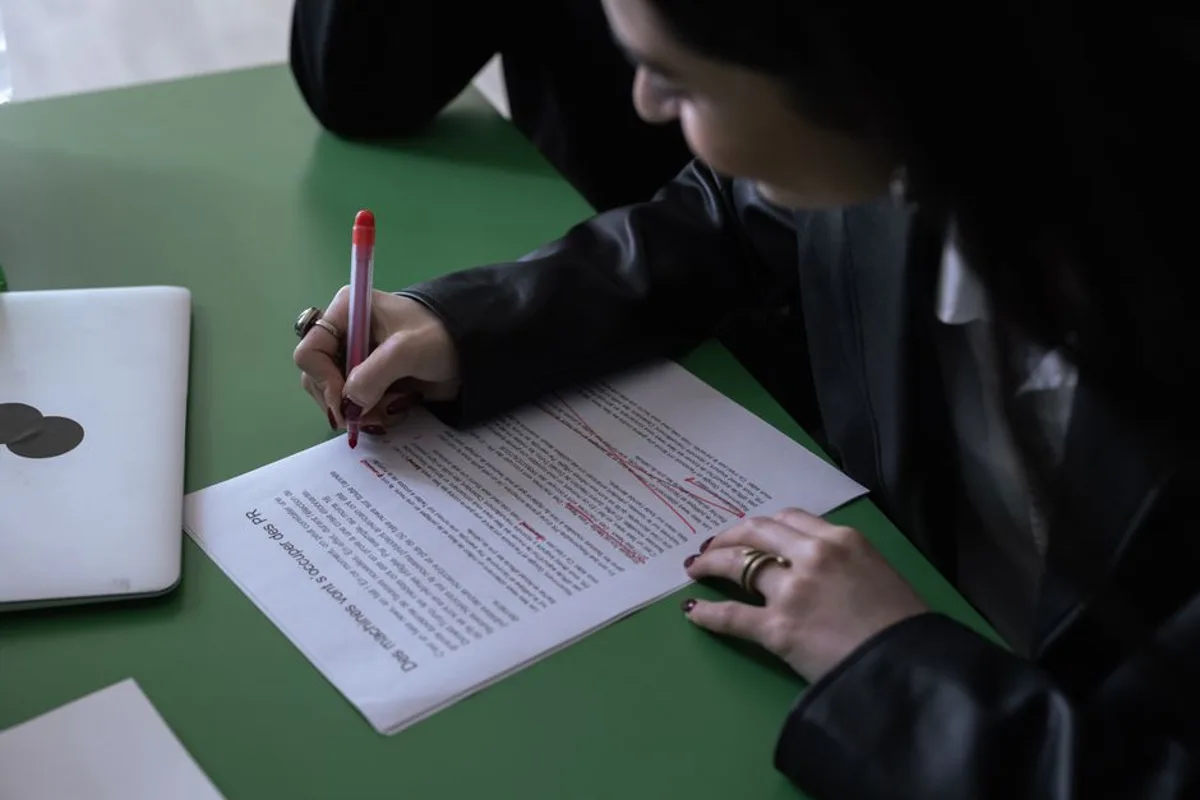
- Rewrite and verify (human). You impose the brand voice, cut the generic, and above all verify every fact, figure and quote. No number is published without a source.
- Measure (human plus data). You look at what performs and adjust, as with any content.
The value of this workflow is not to produce more content, it is to produce content that stays yours, faster. Speed without curation produces noise; curation without speed produces delay. The point is in the combination.
Between what we sell and what is true
If you are looking to publish ten articles a week with no one to review them, AI will let you, and your brand will pay for it. A little content you stand behind beats a lot of generic content. We will say so before framing any setup.
The non-negotiable guardrails
Three rules protect your brand. First, no unverified fact: AI is wrong with confidence, and it is your name on the publication. Second, the voice goes through a human review: a text that smells of the machine erodes trust as much as a mistake. Third, internal transparency about the use of AI, so the editorial decision stays controlled rather than suffered.
FAQ: AI content generation
Can AI replace a writer? No for the decision, yes for part of the execution. It speeds up ideas, structure and first drafts, but the angle, the voice and fact-checking stay human work.
Is AI content good for SEO? Useful, accurate content is good for SEO, whether AI-assisted or not. Generic, false or duplicated content is penalised, AI or not. The criterion stays real quality.
How do you keep your brand voice with AI? By framing the voice before producing and imposing a human rewrite after. AI proposes, the brand disposes. Without that step, all content ends up sounding alike.
What is the main risk of AI content? Falsehood published with confidence. AI invents figures, quotes and sources. Every fact must be verified before publication, or it puts your credibility on the line.
How much time does AI save? Several hours a week according to surveyed marketers (verified 15 June 2026), mostly on the start and the repurposing. That saved time has value if reinvested in curation, not if it goes to publishing more generic content.
Before you request a quote
Using AI for content is no longer a question of yes or no, but of how. Frame the angle and the voice upfront, let the machine speed up production, and keep human curation on the voice and the facts. That is what separates a productivity gain from a brand dilution.
On method, we frame your voice, your topics and your editorial guardrails in a working session, then set up an AI plus human curation system calibrated to your brand.